
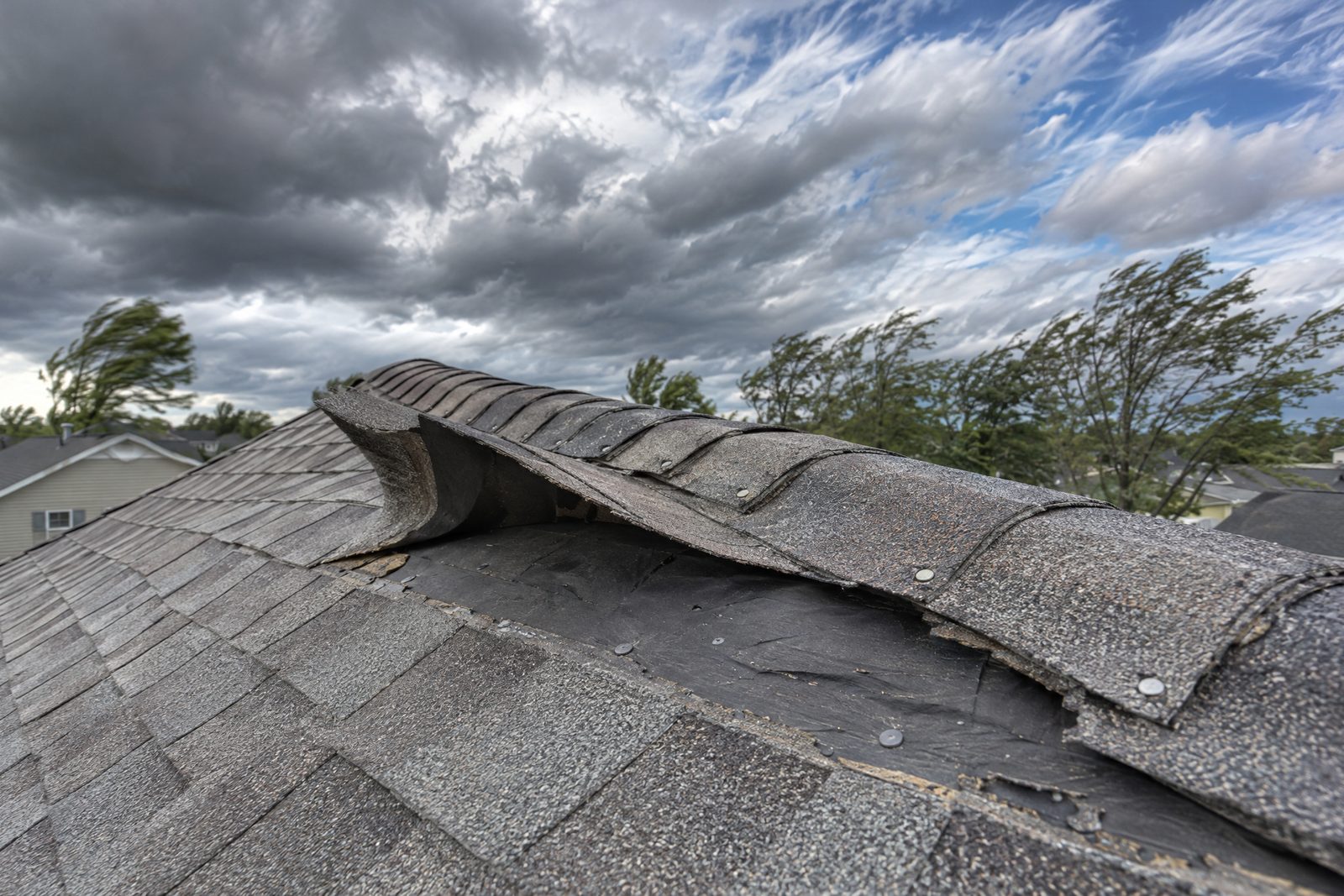
Roof repair in Loveland, CO
Most roof leaks and wind damage in Loveland can be repaired rather than replaced: a run of lifted shingles, a cracked vent boot, a flashing joint that let go. We find where the water gets in, fix it with matching materials and tell you when a repair is no longer worth it. Repairs under 100 square feet usually need no permit.
- Find the source, not just the stain
- Matched shingles where we can
- Straight answer on repair or replace
Tell us what the roof is doing
We usually answer the same day. After a hail storm, we answer until dark.
Water coming through the ceiling right now? Call or text: 970-555-0162
What the signs usually mean
Most repair calls start with one of these. Here is what each one tends to point to on a Front Range roof.
Shingles in the yard
Wind lifted a run of tabs, often along the ridge or a rake edge. Usually a repair if the shingles around them are still flexible.
A stain on the ceiling
A leak somewhere uphill: a vent boot, flashing, a nail that backed out, or a valley where two slopes meet.
Drips only in heavy rain or melt
Water backing up under shingles at the eaves or behind a chimney. Often flashing, sometimes an ice dam.
Granules in the gutters
Normal on a new roof. On an older one, after a storm, it can mean hail or ageing. Worth an inspection.
Curling or cracked shingles
Sun and freeze-thaw ageing. A few can be replaced; a whole slope of them means the roof is near the end.
Daylight in the attic
Missing shingles or a gap at a vent. Needs a repair before the next storm.
Most leaks start at the joints, not the shingles
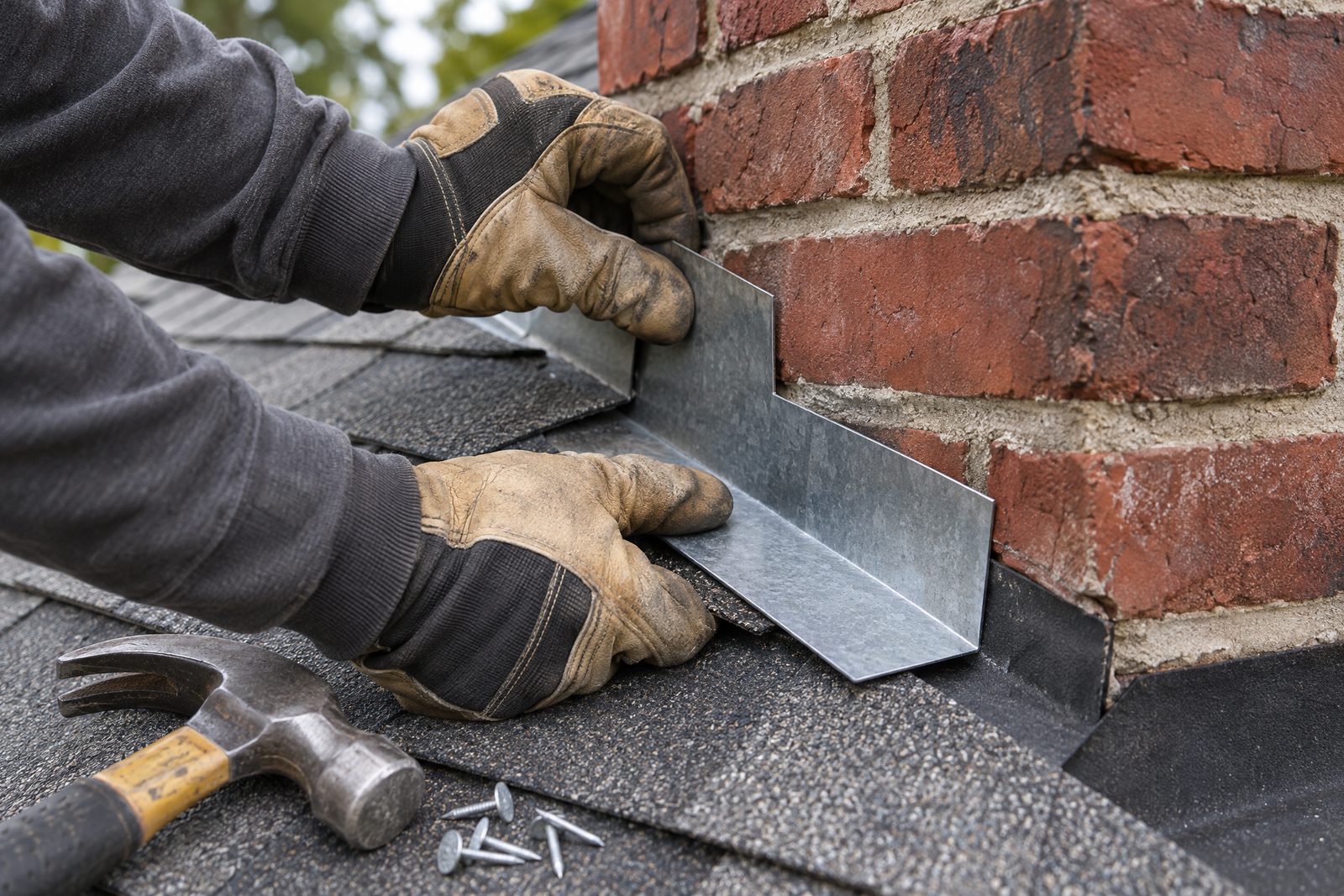
Flashing is the bent metal that seals where the roof meets a chimney, a wall, a skylight or a vent. Shingles shed water; flashing keeps it out of the joints. When a roof leaks long before its time, the flashing is the usual suspect.
Front Range wind matters too. Fort Collins treats itself as a high-wind area, and lifted shingles are the most common repair we do from March to May. We reseal or replace the tabs and nail them to the high-wind pattern.
If the damage came with a storm, start with the hail damage page: the repair may be part of a claim.
“A spring wind peeled back a strip of shingles along the ridge. Wes came the same week, fixed it, and explained why a small repair like ours did not need a permit but a bigger one would.”
Repair it, or replace it?
We look before we price. This is how the answer usually comes out.
| What we find | Usually | Why |
|---|---|---|
| A run of wind-lifted shingles on a sound roof | Repair | The rest of the roof is still flexible and sealed |
| A cracked vent boot or loose flashing | Repair | The part failed, not the roof |
| Hail bruises on most slopes | Replace | Patching leaves bruised shingles to leak later |
| Brittle shingles that crack when lifted | Replace | A repair breaks more than it fixes |
| The same spot leaking again after a repair | Look deeper | Often decking or flashing underneath |
| Damage over a quarter of the roof outside town limits | Replace | Larimer County rules require the whole roof |
How a repair visit goes
From Loveland we reach Berthoud in about 15 minutes and Fort Collins, Windsor, Wellington and Estes Park the same day.
Trace the water.
From the attic and the roof, to the real entry point.
Photograph it and write the price.
Before we touch anything.
Fix it with matching materials.
Sealed and nailed to the high-wind pattern.
Show you the after photos.
Dated, so you have them for the next storm.
Roof repair questions we hear most
Does a small roof repair need a permit?
In Loveland, repairs under 100 square feet, one square of roof, do not need a permit. Fort Collins requires a permit for partial work over one square. In unincorporated Larimer County, repairing 25% or more of the roof means the whole roof must be replaced to the county's Class A and Class 4 rules. We tell you which side of the line your repair is on before we start.
There is a stain on my ceiling. Is the leak right above it?
Often not. Water runs along the decking and rafters before it drips, so the hole can be several feet uphill from the stain. We trace it from the attic and the roof. Common sources are vent boots, the rubber collars around pipes, and flashing at chimneys and walls.
Can you match my existing shingles?
We try. Many shingle colors are discontinued after a few years, and new shingles look brighter until they weather. We bring samples and show you the closest match before we start, and on a back slope it rarely shows.
When is a repair not worth it?
When the shingles are brittle and crack as we lift them, when the same area leaks again after a repair, or when hail has bruised most of the roof. Then we show you the photos and talk through replacement instead.
What should I do if water is coming in right now?
Move furniture and electronics out of the way, put a bucket under the drip and photograph the ceiling. If the ceiling is bulging with water, keep clear of it. Do not go on the roof. Call or text 970-555-0162 and we will tell you what we can do that day.
Something lifted or leaking? Tell us where.
A photo from the ground helps. If the problem is bigger than a patch, see roof replacement.
Book a free storm inspection
We usually answer the same day. After a hail storm, we answer until dark.
Water coming through the ceiling right now? Call or text: 970-555-0162